Blog / Best season to visit
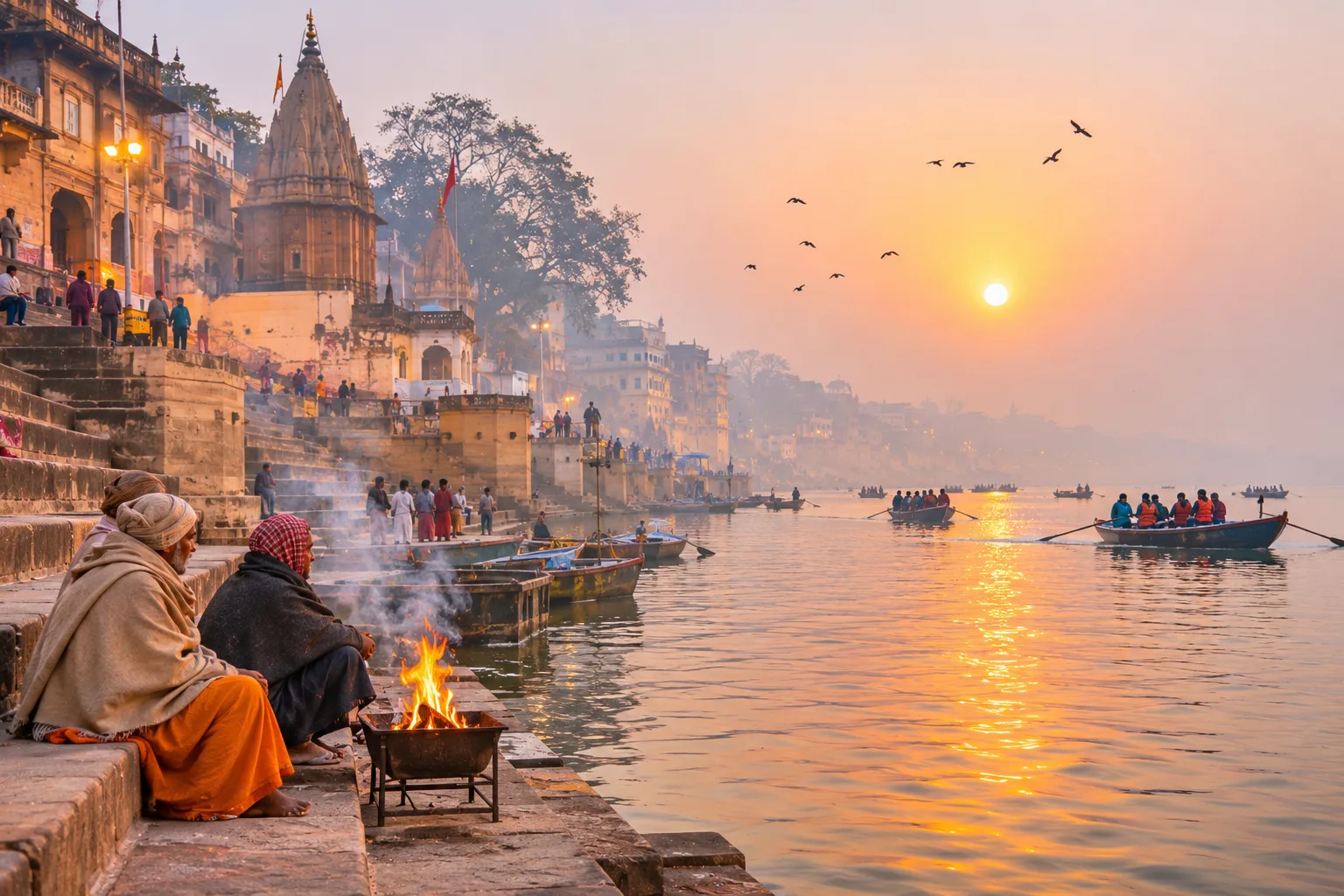
Best season to visit Varanasi: winter vs summer vs monsoon
Varanasi is a year-round destination in the sense that its temples and rituals never pause, but the experience of visiting changes a great deal depending on the month.
Winter (October to February) — the most popular window
Daytime temperatures sit comfortably between 12°C and 25°C, mornings can be foggy, and evenings are cool enough for a light jacket at the Aarti. This is peak season: hotel prices rise, boats and guides get booked earlier, and Dev Diwali in November draws especially large crowds. If comfort matters more to you than crowd size, this is still the best overall window.
Summer (March to June) — hot but quieter
Temperatures regularly cross 40°C by May and June, and midday sightseeing becomes genuinely difficult. The upside is thinner crowds, lower hotel rates, and boats and guides available on short notice. Visitors who come in summer generally restructure their day around it — sightseeing early morning and late evening, resting indoors through the afternoon heat.
Monsoon (July to September) — the river changes character
The Ganga rises noticeably during monsoon, sometimes submerging the lower steps of several ghats entirely. Boat rides continue but routes shift with water levels, and heavy rain can cancel a day's plans on short notice. Humidity is high, but the city is visibly greener and quieter with tourists during this stretch.
Our recommendation by traveller type
- First-time visitors: October to March, for the most comfortable and classic experience.
- Budget-conscious or crowd-averse travellers: April, May or September — hot or humid, but noticeably cheaper and quieter.
- Photographers: Winter mornings, for the fog rolling off the river at sunrise.
- Pilgrims on a fixed ritual date: The date matters more than the season — we can advise on what to expect for your specific dates.
Whatever month you're considering, our tour packages and boat bookings adjust their timing seasonally — sunrise boat slots, for instance, shift later in winter than in summer.